

Our Pro
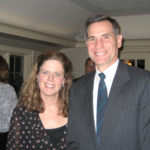
Team Horse & Rider member Robin Gollehon has been involved with horses most of her life, producing more than 75 Appaloosa Horse Club world and national champions in Western pleasure, hunter under saddle and yearling longe line. A member of the American Quarter Horse Association (AQHA) Professional Horseman’s Association, Robin tied to win the Quarter Horse Congress in 2005 and has been at the top at all major 2005 National Snaffle Bit Association Futurities. Robin and her husband and business partner, Roger, own and operate Gollehon Show Horses in Trafalgar, Ind.

Our Student
Sharon Sweet of Columbus, Ind., currently shows her 7-year-old Quarter Horse gelding Modern Affair (“Sweetie”) in Western pleasure. As she improves her skills, Sharon is making the jump from the open show circuit to AQHA shows where she’ll compete in novice amateur and amateur select Western pleasure. Sharon wants to improve her horse’s consistency while maintaining the authentic rhythm of her horse’s gaits.
Lesson Plan
Lesson’s objective: To gain a greater understanding of what self-carriage looks and feels like, and how to obtain and maintain it–thus improving your skills in Western pleasure and other performance events.
Self-carriage defined: A horse’s ability to properly carry himself, similar to good posture in people. He’s responsible for his own carriage and doesn’t rely on his rider to hold him in the proper position. He should be holding his shoulders up while keeping his back round, and he’s maintaining collection.
Why you need this: While Western pleasure is often considered an easy class to participate in, it’s one of the hardest to win. Almost any rider can learn to walk, jog and lope, but doing it at the level of skill necessary to win is no easy feat. Western pleasure is difficult not only because it must be done on a very loose rein, but it’s also performed at an extremely slow speed. To be successful in pleasure, it’s imperative that your horse can hold himself in a balanced frame while performing at the walk, jog and lope. This lesson will emphasize how every detail in your riding and your horse’s execution of the three gaits must be perfected and fine-tuned to produce a winning performance.
How you’ll achieve this: This lesson is divided into two steps. The first is to achieve collection by holding your horse’s face and applying pressure with your legs, which will encourage him to lift in front, round his back and drive from his hindquarters. The second step is to create enough “stay” so he can perform on a loose rein.
Why this works: Your horse is an athlete. If you teach him to position his body to work at his optimum level, you’ll bring out his best performance.
What you’ll need for this lesson:
- A fenced arena with soft, level footing is best, but if that’s not an option, you can work in an open area as long as your horse is broke and quiet.
- Your schooling tack (including the appropriate bit for your horse’s level of training).
- Spurs with rowels determined by your horse’s sensitivity.
Skills your horse must have: Although this lesson is for more advanced horses, it’s important to set self-carriage goals for your horse at the beginning and throughout his training. But before working on self-carriage, he needs to willingly respond to your legs and give in his face.
Caveat: If you don’t feel confident in your horse’s (or your) capabilities, seek the help of a qualified professional. Keep in mind that this is a medium to advanced lesson, so if your horse doesn’t adequately respond to your basic cues, you’re not ready to work on self-carriage and collection.
Before You Begin
In order to progress as a rider, you must develop “feel” in your hands, legs and seat, and you need to grasp the basic causes and effects of your cues. When learning a new skill many novice riders assume the horse is always right and they are wrong, and without knowing how to correct the problem, these riders do nothing. However, not acting is as detrimental as doing the wrong thing. While it’s important to reward your horse for doing the right thing, it’s just as important to correct him when he’s wrong. The more consistent you are with your cues and corrections, the quicker your horse will catch on, and that’s when it’s useful to have a professional help you understand that “feel.”
Keep in mind, when you’re attempting to correct one thing in your horse, you may have to begin with another. For example, if your horse carries his neck up it may be because his back is too low, and you’ll need to ask him to lift his belly to bring his neck down. If he carries his shoulders too low, you’ll correct him by first asking him to lift his neck–then you can ask him to put his neck back down after he’s fixed his shoulders.
Assess Your Horse’s Responsiveness
To determine which bit to use ask your horse to give his head to one side or the other. If he gives without resistance you’re using an acceptable bit; if he resists, work in a snaffle until he willingly gives his head when you ask. To determine the correct spurs to use, bend your horse’s head toward the direction of your cue leg and apply your spur until he moves his hip. If he moves quickly use ball spurs; if he ignores your leg, use rowel spurs.
Keep it Natural
Western pleasure is not only about going slow. It’s more important to exhibit your horse’s true gaits than to compromise the quality of his movement. To keep the “naturalness” in your horse’s movement you need to acknowledge his abilities.
Self-Carriage at a Stand Still
1. Wrong. You must be consistent in your expectations. If you only ask your horse to stand with his shoulders up and his back rounded some of the time, he’ll opt for the easy way out when he can get away with it. Get in the habit of asking him to exhibit self-carriage while he’s standing all of the time, so when you ask him to move forward with collection he’s already prepared.

If you ask him to go forward while he’s standing with most of his weight on his forehand and his back hollowed, it’ll most likely take several strides before you can get him to lift his front end. Don’t just camp out on his back while you’re waiting for your next class or chatting with a friend; allowing him to completely relax, sleep, or just rest while you’re on him does not reinforce self-carriage. Either make him stand up correctly, or if he or you need a rest, get off.

Self-Carriage at the Walk
2A. Wrong. Achieving self-carriage is a building-block process, so we’ll begin at the walk. In photo 2A, notice how Sweetie’s head and neck are well below level, his back is hollowed, his shoulders are down, and his weight is on his front end, all of which are demonstrating a lack of self-carriage. The more Sharon pitches her reins to him, the lower his shoulders drop, and overall he’s relying on her to hold him up, rather than doing it himself.
2B. Lifting at the walk. In this photo, I’m demonstrating how to improve self-carriage at the walk by asking Sweetie to lift his shoulders. To encourage him to do this, I’m asking him to lift his head and neck by drawing my reins slightly up and back, while asking him to walk forward with my legs. If your horse initially resists at the poll and puts his nose in the air, continue to hold his face until he softens.
Here, I’m also applying both spurs to encourage forward motion while holding the reins slightly up and back to prevent Sweetie from just moving faster. The primary idea of collection is to create enough forward motion in your horse while continuing to drive with your legs, but also “closing the door” in front by holding his face. This is where that “feel” comes into play. You have to determine how much forward motion to create with your legs (like stepping on the gas pedal in your car), while holding enough with your reins to prevent your horse from rushing forward.
2C. Correct at the walk. Sharon is demonstrating correct self-carriage at the walk by encouraging Sweetie to lift his back. She’s applying pressure with her right spur while lifting her right rein, bending Sweetie slightly to the right. Here, Sharon doesn’t want him to move forward, but instead asks him to transfer his motion sideways, moving his hip away from her leg. She then adjusts the amount of bend in his body according to how he reacts to her initial cues.
If Sweetie tries to move forward, Sharon asks him to bend more to the right (in this example) to discourage forward motion. She’s also encouraging him to simultaneously lift his belly by holding her spur against his side and adding pressure as necessary. As soon as she feels him move away and lift she releases the pressure to reward him.
Self-Carriage at the Jog
3A. Wrong. Here, Sweetie’s back is so hollowed it’s even evident in the way the saddle is sitting on him. It’s higher at the withers but is angled downward on his back. His neck is unacceptably low and his nose is past the vertical.
3B. Lifting at the jog. I’m applying both spurs in a bumping rhythm to create lift and drive while holding the reins enough to prevent too much forward motion. To make my cues clear, I’m raising the reins in my left hand while allowing them to slide through my right hand. Applying bit pressure from a lower point encourages Sweetie to give at his poll and allows me to reposition his body. As soon as he responds by rounding his back, I release the spur pressure. Ideally, when I release the rein and spur pressure he’ll stay lifted and rounded. If he flattens out again and falls forward, I’ll put the pressure back on until he learns to maintain self-carriage.
3C. Correct at the jog. Here, Sharon is demonstrating a collected jog with self-carriage. Sweetie’s neck, shoulders and back are up, producing a level topline; the tips of his ears should not fall below his withers. Also, notice how the saddle is sitting parallel to the ground instead of tipped downward as it was in Photo 3A.
Self-Carriage at the Lope
4A. Wrong. Our goal at the lope is to create a flowing, natural three-beat rhythm that makes show-ring speed look effortless. To lope without collection and self-carriage creates an unnatural gait and sets your horse up for failure. If your horse is unbalanced, it’s magnified at the lope and as Sweetie is here, many horses compensate for this by pulling themselves along and elevating their necks instead of driving from behind. The lope becomes strained and uncomfortable for the rider, and the rhythm is closer to a four beat with more of a trotting stride behind.
4B. Lifting at the lope. Following the same guidelines at the lope as we did at the walk and jog, I’m creating lift in Sweetie’s shoulders with the reins while keeping his back rounded with drive from behind. I’m using more of my outside spur (whichever spur is opposite to the lead you’re on) to get more drive from behind. If necessary, I would use both my spurs to get more lift in his back end, and then balance by lifting the reins.
4C. Correct at the lope. After I’ve worked on positioning Sweetie correctly, it’ll be easier for Sharon to achieve that same self-carriage when she gets on. As a novice, it’s difficult to make a correction before you have a clear understanding of what “correct” feels like–so it’s often helpful for a trainer to fix the problem first, and then let the student get the “feel.” In this photo, Sharon is able to round Sweetie’s back and lift his shoulders to make him drive deeper from behind with the proper cadence and rhythm.
Final Thoughts
Just because your horse is carrying himself properly doesn’t mean your job is done. Maintaining self-carriage is a continual process and needs to be reinforced throughout your horse’s career. While schooling, riders often drill their horses too much on show-ring riding. Horses are naturally inclined to take the easy way out, so it’s your responsibility to encourage self-carriage without burning him out. This process takes time, so be patient with your horse and yourself.
This article originally appeared in the August 2006 issue of Horse & Rider. For further advice on teaching your horse to achieve self-carriage, see our February 2010 Team H&R Problem Solvers article with Robin. To order a copy of either of these issues or other back issues, call 877-717-8928.