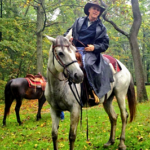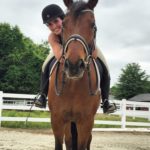



Judy Dawley, a children’s therapist, began riding at age 50 and later realized her childhood dream of owning a horse.
She felt she owed it to her mare to learn more about horse care, and so she signed up for classes at Rochester Community and Technical College in Minnesota.
Chris Robertson signed up for equine management courses at Pierce College in Southern California upon the urging of his son, Brandon, who was taking the classes as part of his regular college curriculum. Bob Parsons is taking the same courses so that in a few years, when he retires, he can buy some land and raise horses.
Judy, Chris and Bob, like many others across the country, finished their formal schooling a while ago. They work full time and try to fit that around raising families and being active in their communities. Yet for them, school isn’t a thing of the past. They are taking advantage of the many opportunities available at colleges and universities to learn about horses, from their care and management to their conformation, anatomy and training.
“When I found out that the college had an equine education program, I couldn’t get registered fast enough,” Judy says. “I’ve certainly gained an incredible amount of knowledge, but I’ve also gained an incredible amount of self-confidence.”
What’s Out There
It used to be that school was just for kids, and anyone who wanted to learn about horses had to get either a two- or four-year degree in animal science, or put even more time in and go to vet or graduate school. But now just about anyone can take a wide variety of equine classes, short courses, and seminars at any college that offers a horse program. You can choose from among classes that meet for one afternoon, one evening or regularly for months; from traditional classroom settings to hands-on handling of horses at a farm; from listening to an instructor in the flesh to distance-learning courses where the professor is broadcasting via television from a remote location.
Flexibility is in. For example, at Texas A&M University in College Station, Dr. Brett Scott, an extension horse specialist, works with county agents to provide programs throughout Texas. One day-long workshop covers basic horse management, while another discusses mare and foal care, and a third, about conditioning programs and training regimens, is geared to performance horse owners.
“We probably offer 40 of these a year all over the state,” Dr. Scott said. “We tweak the program based on the response we get. For example, in Basic Horse Management 101, we talk about nutrition, health care, vaccination programs, and we gear it toward new owners. I’ve added facility design because I’ve been getting a lot of questions about that. People are boarding their horses, but maybe they have five acres and they’d eventually like to take care of their own horses.”
Dr. Robert Coleman is an extension horse specialist at the University of Kentucky and conducts a similar program he calls simply Horse College. “The program has been very popular,” he says. “We have had great support from local professionals such as vets to cover the health topics, and the Kentucky Horseshoeing School to cover the hoof care topic.”
Cal Poly San Luis Obispo in California has a complete four-year program that includes everything from classes in equine exercise physiology to a hands-on horse program where students actually breed and raise young horses. Through open enrollment, anyone not a full-time student can still take individual classes if room permits. Cal Poly also offers more opportunities at night.
Not Just for Kids
• Many colleges and universities offer horse courses on days and at times convenient to a busy, working person’s schedule.
• Taking a class will allow you to update your knowledge of equine health, research, management and training.
• A college riding class may provide an opportunity to ride a variety of well-schooled mounts, allowing you to improve your skills more quickly.
• Networking with other students, young and old, will open up new resources and friendships.
• Finding and enrolling in a college horse class, short course or seminar may be as simple as searching the Internet, or contacting the college continuing education office or the local extension agent.
“We have some courses that are taught by a number of different professors from different places through our distance-learning program,” says Dr. Jaymie Noland, a veterinarian and professor in the Cal Poly department of animal science. “You would attend class at San Luis Obispo, for example, and lectures would be broadcast from Cal Poly Pomona and the University of California at Davis.”
Yet it isn’t just four-year universities that provide easy access to continuing horse education. Two-year community colleges, because they are smaller, are often able to provide targeted programs. Rochester in Minnesota and Pierce in California are just two examples.
“One of the goals of our community college is lifelong learning,” says Dr. Pam Whitfield, who teaches both English and equine courses at Rochester. “We have two intro equine classes that we require everyone to take because of safety. We want them to have that baseline. But then they can take the occasional class or whatever fits into their schedule. Some take equine classes part time and may take up to five years to complete the curriculum, but it’s possible to get through our program in two years.”
Rochester’s class Fundamentals of Horse Handling and Training is extremely popular. It teaches students how to handle young horses, sacking out, lungeing, and even driving.
“RCTC’s instructors are wonderfully well-rounded, well-educated themselves, and great motivators,” says Rochester student Margaret Kunesh-Majerus. “They have covered all aspects of horses intelligently and understandably.”
Kunesh-Majerus trains riders herself, running a program called 3 Feathers Horsemanship and Peace Gardens. Many college classes can help both beginners and more expert horse people.
Pierce College likewise offers a complete horse program. Paddy Warner teaches most of the classes, including Equine Management, where students learn to take care of the college herd. These horses have summer jobs as pack horses in the Sierra Nevada Mountains, returning to Pierce each fall.
“People can get an associate of science degree to transfer to a four-year college or they can get an equine science certificate,” says Regina Casey, an agriculture assistant at Pierce. “We have courses on principles of anatomy, animal health and disease control, equine training, and equine health and first aid.”
Warner offers as many practical applications as possible in the Equine Management class. One day her husband, John, taught horse trailer and tractor driving.
“I put the students in the back of the trailer and drove it correctly,” John says. “Then I drove the trailer like most people usually do. They had to hang onto things and sit down. They couldn’t believe it. I told them, ‘Now imagine how your horse has to scramble when you drive like that.'”
Why Take a Class
While many attend these programs in the hope of making a living in the horse industry, even more simply want to improve their ability to care for their own animals.
“The equine world is ever-changing,” says Kunesh-Majerus. “In order to feel comfortable teaching current horsemanship, I needed to feel comfortable in my own knowledge.”
Pat Lawyer, who owns a broodmare in California, agrees. “Like human medicine, equine care and medicine try to stay on the cutting edge,” she says. “One must really keep up the research, reading and questioning those who are far more knowledgeable than we are.”
Judy Dawley points out that taking classes has saved her money. “It’s definitely money well spent,” she says. “I’ve probably been spared a whole bunch of money that I would have had to shell out to correct mistakes that I might have made otherwise.”
Even a riding class through a school can sometimes offer more than taking lessons on your own horse with a trainer.
“There’s great value in taking lessons on a horse that’s not your own,” says Rochester’s Dr. Whitfield. “Students get on a variety of horses, and each horse teaches us something different. Where else can you get on six to eight well-schooled horses than in a college environment?”
Be open also to opportunities that might not come straight from a university. A couple of years ago in California, several racetrack groups collaborated with U.C. Davis to present a free one-day seminar on the West Nile virus at Santa Anita Park. Dr. Greg Ferraro, the director of Davis’ Center for Equine Health, brought together experts from his university, the University of Florida (an area especially hard hit by West Nile), the University of Pretoria in South Africa, and an official with the California Department of Food and Agriculture. Attendees received the most up-to-date information available from worldwide experts.
“You can’t learn enough,” Dr. Whitfield says. “I’m always learning. We offer judging classes. But even people who never plan to get their judge’s card find it useful. If you are a ring steward at a horse show, you’ll know how to be more helpful to the judge. If you show, you’ll know what the judge wants. If you buy or sell a horse, you’ll know how to set up a horse properly.”
Beverly Brown, who breeds and owns horses, recalls a pack trip she once took sponsored by the University of California at Santa Barbara extension. “That set me on fire about packing,” she says, “and I went back several times both for pack trips and, even more fun, the horse drives to and from the Owens Valley to the Sierras.”
Today, Brown is studying conformation through seminars offered by the Thoroughbred Owners of California. “My eye for conformation is not what I would like it to be,” says Brown. “But after visiting 15-20 trainers’ barns and watching them point out conformation flaws, it is beginning to sink in.”
Those who take classes agree that one of the greatest benefits is meeting other horse people.
“It is wonderful to spend a day or a weekend with folks who share your interest,” says Brown. “Many of them have become valuable resources for me as well.”
Kunesh-Majerus feels the same way. “We students have found common ground,” she says, “and it is positively exciting to explore ourselves and others through the horse.”
Students bond with each other and create their own social networks. Dr. Whitfield says that many of her students go trail riding together and accompany each other to horse shows.
Age Isn’t a Factor
Adults past the “normal” age of most college students may hesitate to take a class with “kids” so much younger. Equine teachers and students alike say this just isn’t an issue. In fact, if anything, someone going back to school brings more commitment to learning.
“I’d say 40% of our students are adult women,” Dr. Whitfield says. “Many adults already have college degrees. They come in and take just the equine courses part-time.”
Judy Dawley had some reservations at first. “Sometimes it’s intimidating to be in class with so many younger folks who have so much more experience than me,” she says. “But I have been treated like an equal and have never been made to feel foolish for asking a question.”
Kimo Krogfoss teaches logic and ethics at Golden West College in Southern California and has also owned horses. He notes that older students are among his best.
“I’m getting more and more of exactly that group,” Krogfoss says. “They are so dedicated and focused. I tell my younger students, ‘Don’t compete with them. Make friends with them because they’ll help you.’ “
With more and more working adults taking classes, teachers and schools are adjusting their schedules to accommodate them. Dr. Scott at Texas A&M said that they have found weeknights more popular than weekends.
“Too many people have family commitments,” he says. “On the weekends, everybody is going to ball games and horse shows.”
Rochester’s programs are also designed so that people can fit them into their schedule. “The instructors are very understanding about life getting in the way,” says Kunesh-Majerus.
The Cook County campus of Rutgers University in New Jersey has an equine program and even offers an online version of its Horse Management Course. Students can use high-speed Internet to download class notes, slides and videos, and they can write the required term paper and take exams from home. They are encouraged, however, to join the class for demonstrations and field trips.
Kunesh-Majerus encourages horse people to jump in and try a class. “It’s a wonderful setting for inquisitive minds, cutting-edge information, and networking.”
Finding Classes
The Internet is one of the best tools available today to find equine classes. Use your favorite search engine to check out which colleges in your area have equine programs. Don’t forget to investigate community colleges. Often they have extensive equine programs with more flexible schedules than four-year schools.
Tack shops post fliers for short courses, and schools will also take out ads in regional horse magazines and newspapers. Check with your county extension agents. Dr. Brett Scott with Texas A&M University says that the county agents do all the promotional work for his series of horse courses.
State horse councils can also be a valuable resource. Dr. Robert Coleman of the University of Kentucky says that in addition to the county agents advertising the university’s Horse College courses at the local level, the programs are listed on the Kentucky Horse Council website.
The University of Kentucky is also spearheading a website (www.horsequest.info) that may eventually be practically a college class in itself. Funded through a USDA Agriculture Telecommunication Program grant, the developing website is interactive and strives to provide up-to-date equine information from a host of experts. It has pooled the resources of the Southern Region Equine Extension Specialists at the 13 Southern Region Land Grant Universities and the Cooperative Extension Service.
Dr. Coleman and Dr. Scott are among the contributors to HorseQuest. Once you register your e-mail address, you can access the answers to hundreds of questions. HorseQuest is also developing learning modules that use text, photos, and short video clips.
Most importantly, when looking for an equine course, decide what it is you want to learn. You may find an equine reproduction course helpful if you plan to breed horses, whereas if you’re looking for information on how to care for them, a management course might be more useful.
Dr. Pam Whitfield of Rochester Community and Technical College advises talking to someone who has already taken a particular class or the instructor, and even watch a class session if it is currently being taught.
“One suggestion for adults who are scared of going back to school and feel inadequate academically is to audit the course,” Dr. Whitfield says. “That way you pay the fee and learn all you can, but you don’t have to take tests and have the stress of being graded on your performance.”